
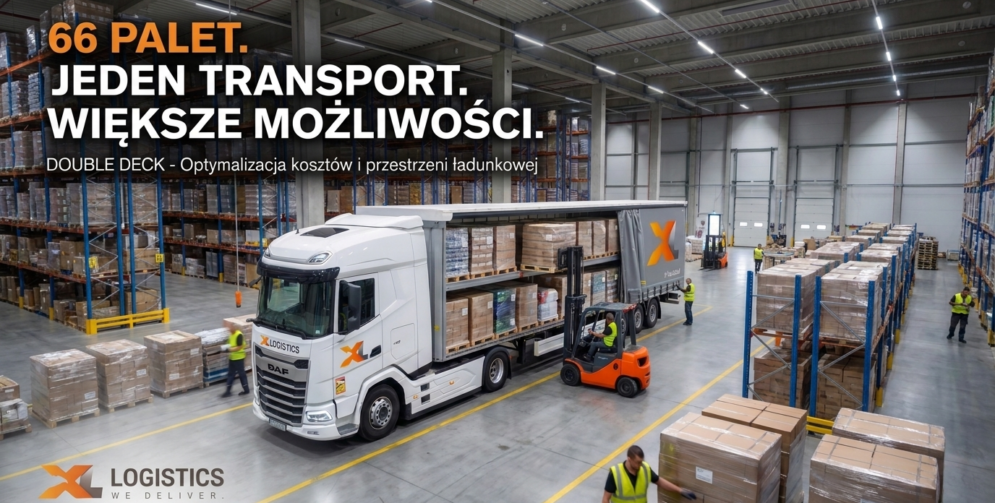
At the XL Logistics warehouse, a truck with a semi-trailer is being loaded with pallets by a forklift and nearby workers.

How can you reduce transportation costs by up to 30% with double-deck trailers?

Rising costs of fuel, tolls, and driver salaries, combined with pressure to improve efficiency, are leading companies to increasingly seek ways to optimize their transportation operations. One of the solutions that is gaining importance in European logistics is semi-trailers
Double Deck.

This technology makes it possible to increase the volume of goods transported without having to increase the number of vehicles on the road.

What is a double-deck semi-trailer?

Double Deck is a semi-trailer equipped with an additional, movable loading deck. This allows the cargo area to be used on two levels.

In practice, this means it is possible to transport as many as:

  • 66 Euro pallets
  • two layers of lightweight and durable fabric
  • a larger amount of cargo per trip

By comparison, a standard semi-trailer typically holds 33 Euro pallets.

Where are the biggest savings realized?

1. Fewer courses

Whereas two vehicles were previously needed to transport a given shipment, the Double Deck often makes it possible to complete the transport with a single truck-trailer combination.

This directly translates to:

  • lower transportation costs,
  • lower fuel consumption,
  • reduction of tolls,
  • reduction in CO₂ emissions.

2. Better use of cargo space

One of the biggest problems in logistics is the so-called “running on empty.”
Double Deck allows you to make use of vertical space that often goes unused when transporting lightweight products.

3. Optimization of Warehouse Processes

Fewer vehicles means:

  • fewer shipments,
  • fewer unloadings,
  • shorter warehouse handling time,
  • easier planning of loading bays.

4. Reduction of unit costs

The more goods we transport in a single shipment, the lower the cost per pallet.

Depending on the type of cargo and the direction of transport, companies can achieve savings of up to 20–30% per transport unit.

Which industries benefit most from Double Deck?

This solution works particularly well in the following cases:

FMCG

Food products and household cleaning supplies are often lightweight and transported on a large number of pallets.

Automotive

Automotive components require timely deliveries and efficient use of cargo space.

Retail and E-commerce

With large shipment volumes and frequent deliveries, every optimization counts.

Industrial Production

Manufacturing companies can reduce the number of shipments while maintaining the continuity of supply.

Double Deck and Sustainable Logistics

More and more companies are pursuing ESG goals and striving to reduce their carbon footprint.

Fewer vehicles needed to transport the same amount of goods means:

  • lower CO₂ emissions,
  • less traffic,
  • more efficient use of transportation resources.

This benefits both the company and the environment.

Double Deck at XL LOGISTICS

At XL LOGISTICS, we use double-deck trailers that can transport up to 66 Euro pallets in a single trip.

This solution allows our customers to:
✔ improve transportation efficiency
✔ reduce logistics costs
✔ Make better use of the cargo space
✔ Achieve goals related to optimization and ESG

If you’re looking for a way to improve the efficiency of your supply chain, it’s worth checking whether Double Deck is the right solution for your business.
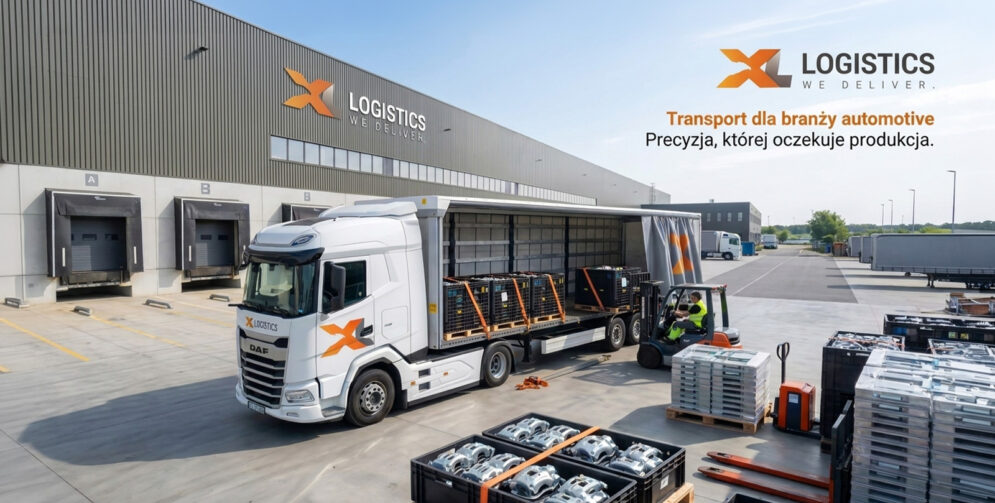
A white DAF truck with an orange XL logo unloading at the loading dock of an industrial warehouse; a forklift is loading pallets nearby.

Transportation for the Automotive Industry – Why Is Logistics Part of the Manufacturing Process?

The automotive industry is one of the most demanding sectors of the economy. High production rates, complex supply chains, and pressure to meet deadlines mean that logistics is becoming not just a support service, but an integral part of the entire production process.

In this environment, every part, component, or subassembly must be in the right place exactly when it is needed. Even a brief delay can affect production continuity, generating costs and disrupting operations throughout the entire plant.

The automotive industry operates according to a precise schedule

Vehicle manufacturers and component suppliers operate within a model in which the predictability of supplies is key. Warehouses are often optimized to minimize inventory, and production processes rely on a steady flow of parts and materials.

This means that transportation must be:

  • on time,
  • flexible,
  • properly planned,
  • monitored at every stage of implementation.

In practice, logistics for the automotive industry requires much more than just basic freight transport. This involves the day-to-day coordination of numerous processes carried out simultaneously by manufacturers, suppliers, and logistics operators.

What types of cargo are transported for the automotive industry?

The automotive sector encompasses a wide range of products that require specialized transportation services. These include, among others:

  • auto and automotive parts,
  • components used in vehicle manufacturing,
  • technological materials,
  • operating fluids,
  • production equipment,
  • production line equipment components.

Each product group may require a customized approach to security, loading, and transportation logistics.

Timeliness has a direct impact on production

In the automotive industry, a delivery delay does not simply mean a postponement of the delivery date.

May result in:

  • production line downtime,
  • the need to change the production schedule,
  • additional operating costs,
  • a disruption in the production process.

That is why companies in the automotive sector expect their logistics partners not only to provide transportation services, but also to actively support them in planning and managing deliveries.

Flexibility and the ability to respond quickly to changes

The automotive industry is dynamic. Fluctuating volumes, new orders, or sudden production needs require rapid adjustments to transportation.

Of key importance are:

  • effective operational communication,
  • the ability to arrange express shipments,
  • availability of appropriate means of transportation,
  • experience in managing manufacturing projects.

For urgent deliveries, solutions that reduce transit time—such as express shipments carried out by a two-driver crew—are often used

Transport Optimization and Operating Costs

Modern automotive logistics also involves cost optimization and the efficient use of cargo space.

Solutions that enable the following are becoming increasingly important:

  • increase the number of cargo units transported,
  • reduce the number of courses offered,
  • improve the efficiency of fleet utilization,
  • reduce the environmental footprint of transportation.

That is why manufacturing companies are increasingly looking for logistics partners that offer a variety of transportation solutions tailored to the specific characteristics of the components being shipped.

XL LOGISTICS – a partner for the automotive industry

At XL LOGISTICS, we provide domestic and international transportation services for the automotive sector, tailoring our logistics solutions to our clients’ production processes. We handle the transport of auto parts, components, production materials, and equipment used by manufacturers and suppliers in the automotive industry.

We understand that in the automotive industry, it’s not just about delivering the cargo. What matters is production continuity, on-time delivery, and the ability to respond quickly to market needs.

That is why we focus on solutions that help our customers build stable and efficient supply chains.

XL LOGISTICS: WE DELIVER.