Truck Traffic Restrictions in Europe: October, November, December 2026
Restriction hours in 15 European countries, holiday dates from October through January, and winter tire requirements for trucks.
Read More

Restriction hours in 15 European countries, holiday dates from October through January, and winter tire requirements for trucks.
Read More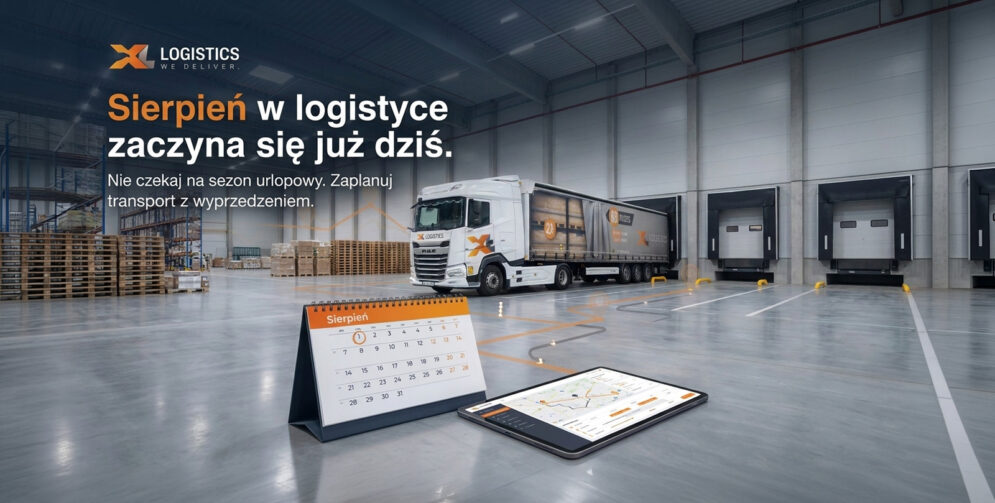
In logistics, time is one of the most important resources. This is especially true during the summer vacation period, when planning transportation well in advance becomes crucial to maintaining the continuity of deliveries.
For many companies, August marks the vacation season; however, for logistics and supply chain departments, it is a period that requires advance preparation. Companies that ship goods to France, Spain, Italy, or the Benelux countries begin planning their delivery schedules several weeks before the start of August to minimize the risk of disruptions.
During the summer vacation period, many companies in Europe operate on modified schedules. Some facilities are closed for vacation or are performing maintenance work; warehouses operate on different schedules; and staff availability is lower than in other months of the year.
This does not mean halting transportation, but it does require greater flexibility and proper preparation of the entire logistics process.
The sooner shipments and deliveries are scheduled, the easier it is to coordinate vehicle availability, avoid schedule changes, and ensure the smooth fulfillment of orders.
Preparing a shipping schedule well in advance allows for more effective transportation management and reduces the risk of unforeseen changes.
Before confirming deadlines, it’s a good idea to check whether the recipients are working according to a standard schedule and whether they are planning any production stoppages or organizational changes.
Booking transportation in advance provides greater flexibility in planning deliveries and allows you to respond more effectively to changing business needs.
Consolidating shipments and making optimal use of trailer space helps reduce the number of trips, improve cost efficiency, and better manage vehicle availability.
The biggest challenge of the vacation season isn’t August itself, but putting off decisions until the last minute. Companies that plan their transportation in advance find it much easier to maintain supply continuity, reduce the risk of delays, and maintain greater operational flexibility.
At XL LOGISTICS, we support our customers in planning domestic and international shipments, helping them prepare their logistics for seasonal changes and ensure smooth delivery operations even during the summer vacation period.
Because effective logistics don’t start on the day of loading.
It all starts with a good plan.
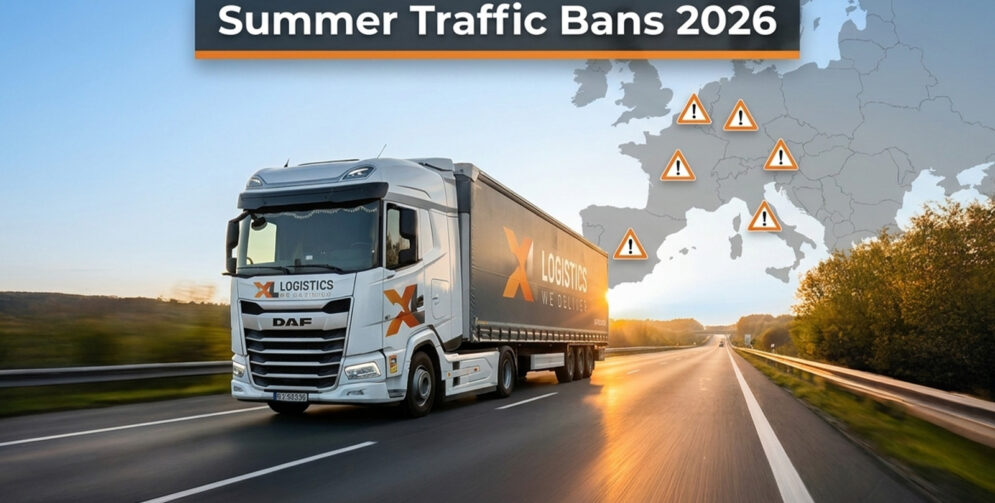
The summer season is one of the most operationally demanding times of the year in European road transport. June brings an accumulation of holiday bans in several countries at the same time, July and August trigger additional holiday restrictions – especially in Germany and France – and Italy applies the year’s most restrictive ban calendar throughout these three months. For companies operating in international transportation, this means the need to plan each route in detail well in advance.
June 2026 brings two periods of increased restrictions: Corpus Christi (June 4) and Pentecost (June 7-8). In both cases, the bans simultaneously cover several key transit countries.
July is the beginning of the period when holiday restrictions are added to the standard Sunday bans. Germany is launching the so-called. Ferienreiseverordnung, France imposes Saturday bans during peak vacation weeks, and Italy operates under one of the most extensive restriction calendars in Europe.
Every Saturday in July and August: 07:00-20:00 on selected highways and national roads, among others. A1, A3, A5, A6, A7, A8, A9, A10, A45, A61. The standard Sunday ban remains in effect: 00:00-22:00.
Saturdays: 15:00-24:00. Sundays and holidays: 00:00-22:00. On the A12 Inntal and A13 Brenner highways (direction Italy), additional directional restrictions on peak days.
August is the culmination of the season and the month with the highest number of restricted days in the entire year. Especially in Italy, where the list of bans covers 12 days. Dates requiring special attention are August 8 and August 15 (Assumption of the Blessed Virgin Mary): both days are covered by the extended dimension of the ban.
Every Saturday: 07:00-20:00 on selected routes. Sundays: 00:00-22:00.
Saturday-Sunday bans remain in full force during the summer. On the A12 and A13, additional directional restrictions.
During peak season: Fridays 18:00-22:00, Saturdays and Sundays 08:00-22:00. Additional regional restrictions: Catalonia, Basque Country, Navarre.
Traffic bans in Europe are not a uniform system. Each country applies its own regulations, which vary in both scope and interpretation. The most important factors affecting the difficulty of planning:
In practice, this means that a single shipment across several countries may require analysis of dozens of variables even before leaving the warehouse.
The accumulation of restrictions in several countries at the same time has a domino effect on the entire logistics chain. The most common consequences during the summer season:
During this period, transportation ceases to be a predictable linear operation. It is becoming a process that requires ongoing response to changing conditions in many countries simultaneously.
At XL LOGISTICS, we view periods of increased restrictions as operational risk management, not just route planning. Our approach during the summer season includes:
This approach minimizes the impact of constraints on on-time delivery and plans transportation realistically in advance.
The season from June to the end of August 2026 is one of the most operationally demanding periods for road transport in Europe. Bans in many countries overlap, culminating in the first and second half of August. In such conditions, the advantage is gained by companies that not only carry out transportation, but can plan it in advance and respond flexibly to changing regulations. Because in modern logistics, the key is not the implementation itself. Predictability is key.
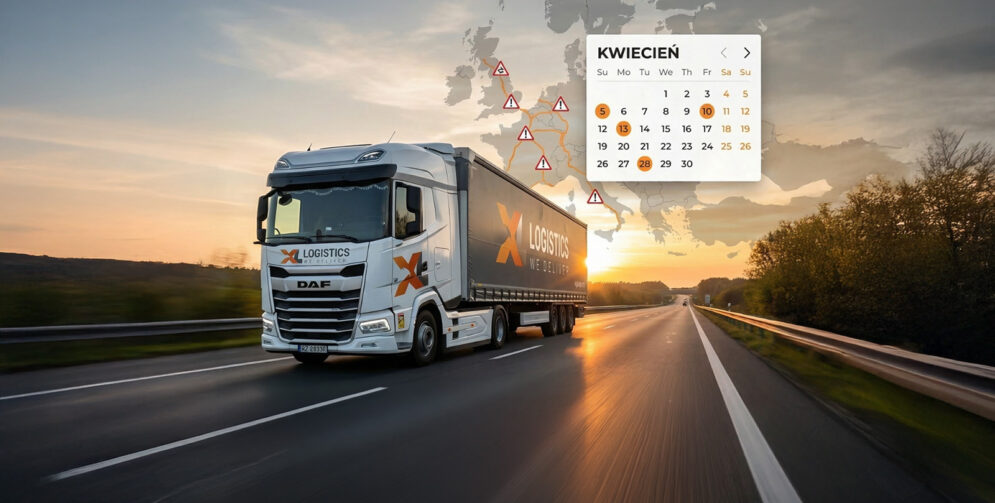
The Easter holiday period in Europe has for years meant an accumulation of restrictions on truck traffic. In 2026, the wave of bans begins as early as April 2 and simultaneously covers multiple countries, different time frames and different rules.
For companies operating in international transportation, it is not just a matter of knowing the calendar. This is a complex operational challenge that affects the planning, timely execution and profitability of the entire logistics process.
April 2 (Thursday)
April 3 – Good Friday
April 4 (Saturday)
April 5 – Easter Sunday
Bans are in effect in most European countries, including:
Austria, Germany, France, Poland, Switzerland, Hungary, Slovakia, Slovenia, Czech Republic, Italy, Croatia, Luxembourg, Liechtenstein
(in many cases at or near 00:00-22:00)
April 6 – Easter Monday
Continued restrictions in most European countries:
Austria, Germany, France, Poland, Switzerland, Slovakia, Slovenia, Czech Republic, Hungary, Italy, Croatia, Luxembourg
April 7 (Tuesday)
Traffic bans in Europe are not a uniform system.
Each country applies its own regulations, which vary in both scope and interpretation.
The most important factors affecting the difficulty of planning:
In practice, this means that a single transport may require a multi-stage analysis even before implementation begins.
The accumulation of restrictions in many countries at the same time has a domino effect on the entire logistics chain.
Most common consequences:
During this period, transportation ceases to be a predictable linear operation.
It becomes a process that requires ongoing response to changing conditions.
At XL LOGISTICS, we view periods of increased restrictions as operational risk management, not just route planning.
Our approach includes:
This approach minimizes the impact of constraints on transportation implementation.
The period from April 2 to 7, 2026 is one of the most challenging times for road transportation in Europe.
In such conditions, the advantage is gained by companies that not only realize transportation, but can anticipate and plan it accordingly.
Because in modern logistics, the key is not the implementation itself.
Predictability is key.

In the transportation and logistics industry, quality is not a statement.
It is the result of orderly processes, responsible operational decisions and consistency in action – every day.
Therefore, we are pleased to announce that the audit of the Quality Management System at XL LOGISTICS has been completed with a positive result, and our organization meets the requirements of ISO 9001:2015 for domestic and international transport and forwarding.
ISO 9001:2015 is an international quality management standard that certifies that a company:
In logistics, this primarily means predictability, security and control over every stage of the order – from transportation planning to documentation to on-time delivery.
What did the audit confirm at XL LOGISTICS?
The positive audit result confirmed that XL LOGISTICS:
The ISO 9001:2015 certificate is valid from January 13, 2026 to January 12, 2029, confirming the stability and continuity of the quality management system adopted.
What does this mean for our customers and partners?
For companies working with XL LOGISTICS, ISO 9001:2015 certification means:
In the TSL industry, where time, accountability and precision matter, process quality has a direct impact on supply chain continuity.
Quality as part of a strategy, not a one-time goal
ISO 9001:2015 certification is not the end of the process for us, but a confirmation of it.
This is part of XL LOGISTICS’ growth strategy, based on:
Each audit is an opportunity for review, optimization and further development – both operationally and organizationally.
Summary
At XL LOGISTICS, we believe that quality in logistics starts with processes and ends with customer and business partner satisfaction.
The positive result of the ISO 9001:2015 audit confirms that the direction we have taken is the right one.
Quality. Stability. Responsibility.
We are building logistics on these foundations.

As of March 17, 2026, the transportation of clothing and footwear will be subject to mandatory monitoring in the SENT system. This is a significant change for companies operating in the trade, e-commerce and logistics operators handling international and intra-Community shipments. At XL LOGISTICS, we are already analyzing the impact of these regulations and helping customers prepare their transportation processes for the new requirements.
The new regulations aim to tighten the tax system and increase control over the movement of goods considered sensitive. For entrepreneurs, however, this means additional formal obligations that must be taken into account in transportation planning.
The SENT system is an electronic surveillance system for the carriage of goods operated by the National Tax Administration. It enables real-time monitoring of road and rail shipments based on freight declarations and geolocation data. To date, SENT has covered, among other things. fuels, alcohol or waste, while from 2026 the scope will be expanded to include clothing and footwear.
The obligation to report in SENT will apply to, among others. garments (CN chapters 61 and 62) weighing more than 10 kg, used garments weighing more than 10 kg, as well as footwear (CN chapter 64) weighing more than 20 pieces. In practice, this means that a significant portion of shipments made for the fashion and e-commerce industries will be subject to monitoring.
The SENT declaration will be required primarily for the import of goods from outside the European Union, intra-Community acquisition of goods and transit through Poland. In such situations, both the shipper and the carrier must ensure that the data is properly entered into the system and updated during transportation.
From an operational perspective, this means having an active account on the PUESC platform, an EORI number, and procedures to efficiently prepare SENT declarations before transport begins. In addition, the carrier must ensure the transmission of geolocation data of the vehicle, which in practice requires appropriate technical solutions.
Failure to declare SENT, errors in data or failure to update information can result in hefty financial penalties and even detention of transport for inspection. From the point of view of trading companies, this means the risk of delayed deliveries, broken supply chains and additional operating costs.
At XL LOGISTICS, we support customers in complying with the new SENT regulations. Our experience in international transportation allows us not only to carry out shipments in accordance with regulations, but also to advise on the organization of documentation, the liability of parties, and the planning of transportation in a way that minimizes operational risks.
Early preparation for SENT changes is a real competitive advantage. Companies that get their logistics and formal processes in order now will avoid nerve-wracking deployments in 2026 and will be able to carry out garment and footwear shipments without downtime.
The end of the year is a natural time to take stock of the activities that shaped the company’s daily operations and strategic development. For XL LOGISTICS, it was a time of intensive work, consistent decisions and further strengthening its position in the European transport market.
The past few months have been marked by high operational loads, growing volumes and increasing customer expectations for on-time, flexible and secure delivery. In response to these challenges, we have consistently developed our fleet, team competencies and technology solutions to support supply chain efficiency.
Modern fleet as the foundation of reliability
Investing in a modern and specialized fleet remains one of the key elements of our strategy. Double Deck trailers, tractors that meet the highest technical standards, and route monitoring and control systems allow us to carry out transports predictably and safely – even during peak logistics periods.
Expanding the fleet not only means greater operational capabilities, but also real support for customers in terms of:
A team that creates quality
Behind every execution is a team – experienced drivers, dispatchers and operational specialists who ensure the quality and safety of services every day. In the past year, we paid special attention to the development of competencies, including. through specialized training in economic and safe driving, time management and operational standards.
It is the combination of technology, fleet and people knowledge that allows us to build long-term relationships with business partners.
Ready for more challenges
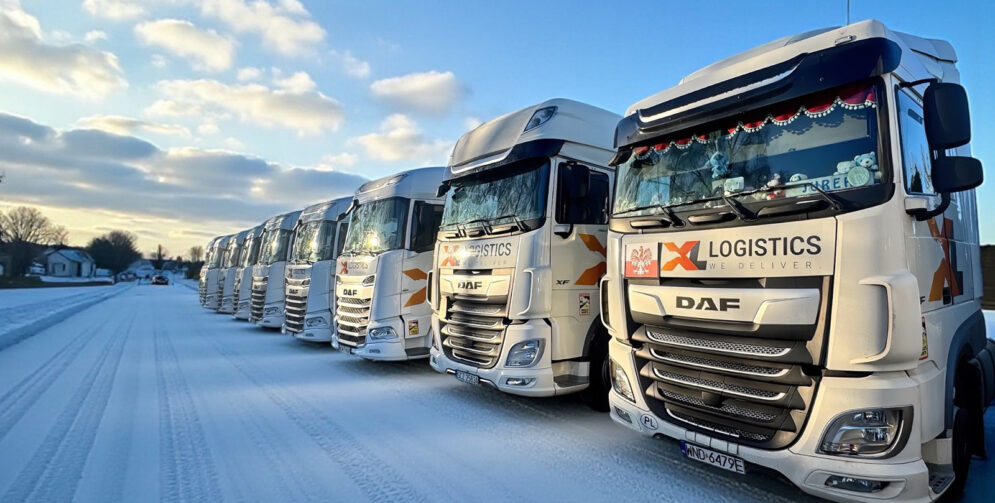
The photo of our fleet that we publish with this summary is not only a symbol of the scale of our operations, but above all a confirmation of our readiness for the next market challenges. We are entering a new period with clearly defined priorities: further optimization of processes, development of specialized services, and maintenance of the highest service standards.
We would like to thank all customers and partners for their trust and the XL LOGISTICS team for their commitment, which translates into a smoothly functioning supply chain across Europe every day.
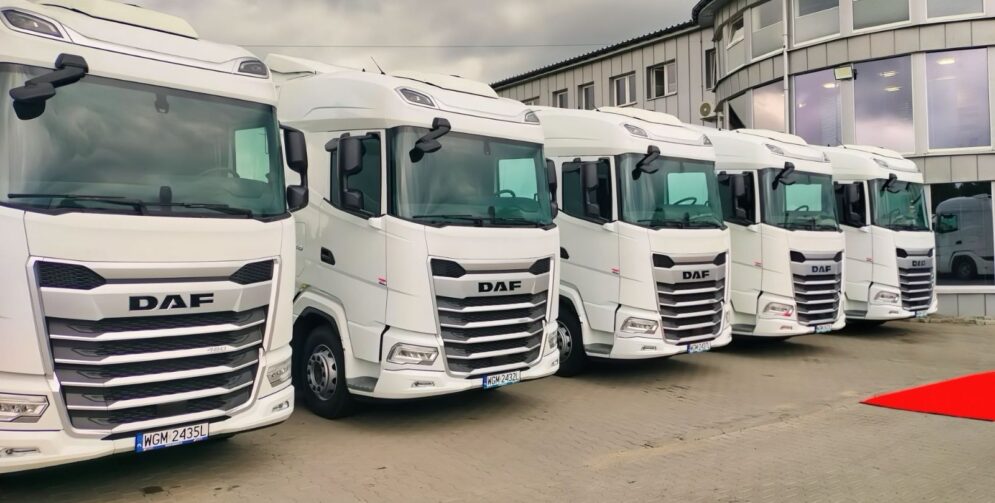
Fleet development is one of the key elements of XL LOGISTICS’ strategy. For 19 years, we have consistently invested in modern transportation solutions, building a stable and reliable position in the TSL market. Today we are proud to announce that more DAF tractor units have joined our fleet – vehicles that meet the highest standards in efficiency, safety and sustainability.
The dynamic development of international transportation requires operators not only to be flexible, but also to continuously improve the quality of their services. The new DAF tractors are for us:
Each step in development is more than a new technology for us – it is a commitment to our customers and business partners. By expanding the fleet, we are ensuring even higher reliability and greater capacity to handle even the most demanding transportation projects in Europe.
We believe that a strong technical and human resource base is the foundation for lasting, responsible relationships. Therefore, the slogan “We Deliver” is not just a promise, but our daily practice – punctuality, safety and full support in every aspect of transportation.
As of July 7, 2025. Poland is introducing temporary border controls with Germany and Lithuania. While the decision is motivated by security concerns, its impact will be felt almost immediately by transportation companies, logistics operators and TSL (transportation-shipping-logistics) customers. Find out what will change and how you can prepare for it.
According to government announcements, starting July 7, 2025. Temporary border controls will be in place on the borders with Germany and Lithuania. In practice, this means:
Although the controls are intended to be temporary, their impact on international supply chains could be significant – particularly in industries relying on just-in-time delivery, the FMCG sector and contract logistics.
The introduction of border administrative barriers means a number of complications for TSL companies:
In this situation, constant monitoring of the situation and operational flexibility to respond to changes in real time are key.
At XL LOGISTICS, we have been preparing for crisis scenarios for years – which is why we are already implementing concrete measures that minimize the impact of border controls on our customers.
Our dispatchers and drivers are in constant contact and have access to up-to-date operational information from border crossings.
With an extensive fleet and a wide network of alternate routes, we can change plans instantly without risking on-time performance.
Each of our partners is assigned a mentor to ensure smooth cooperation and rapid flow of information.
Our customers can count on real support in case of emergency problems – we leave no one without help.
Cooperation with us is not just transportation. It’s a partnership based on experience, transparency and proactivity:
Temporary border controls from July 7, 2025 are another test for the TSL industry. For many companies, this could mean downtime, loss of contracts or operational chaos. But for those who have a strong logistics partner – this is just another challenge that can be passed safely and without loss to business.
At XL LOGISTICS, we are ready. We monitor. We respond. We act in advance.
Contact us today – together we will get through this time safely: