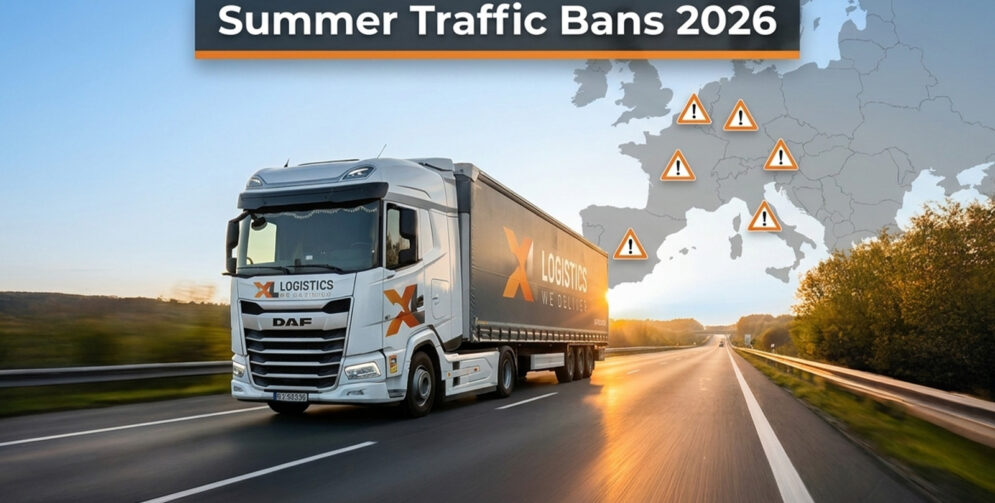
Traffic bans for trucks in Europe April 2-7, 2026

The operational challenge for international transport

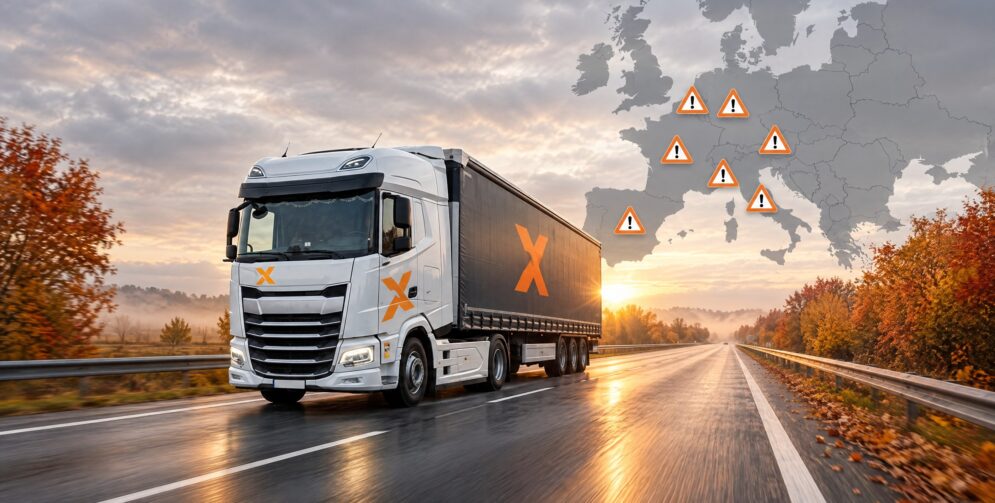
The Easter holiday period in Europe has for years meant an accumulation of restrictions on truck traffic. In 2026, the wave of bans begins as early as April 2 and simultaneously covers multiple countries, different time frames and different rules.
For companies operating in international transportation, it is not just a matter of knowing the calendar. This is a complex operational challenge that affects the planning, timely execution and profitability of the entire logistics process.

Traffic bans – schedule (April 2-7, 2026)

April 2 (Thursday)

  • Austria (A12, A13, A14 – direction Italy): 07:00-22:00
  • Luxembourg (direction Germany): 23:30-24:00
  • Hungary: 22:00-24:00

April 3 – Good Friday

  • Germany: 00:00-22:00
  • Switzerland: 00:00-24:00
  • Slovakia: 00:00-22:00
  • Hungary: 00:00-22:00
  • Czech Republic: 13:00-22:00
  • Slovenia: 14:00-22:00
  • Italy: 14:00-22:00
  • Croatia: 15:00-23:00
  • Luxembourg: 00:00-21:45

April 4 (Saturday)

  • Austria: 15:00-24:00
  • France: 22:00-24:00
  • Poland: 18:00-22:00
  • Italy: 09:00-16:00
  • Hungary: 22:00-24:00
  • Croatia: 15:00-23:00
  • Luxembourg: evening restrictions (FR/DE directions)

April 5 – Easter Sunday
Bans are in effect in most European countries, including:
Austria, Germany, France, Poland, Switzerland, Hungary, Slovakia, Slovenia, Czech Republic, Italy, Croatia, Luxembourg, Liechtenstein
(in many cases at or near 00:00-22:00)
April 6 – Easter Monday
Continued restrictions in most European countries:
Austria, Germany, France, Poland, Switzerland, Slovakia, Slovenia, Czech Republic, Hungary, Italy, Croatia, Luxembourg
April 7 (Tuesday)

  • Italy: 09:00-14:00

Regulatory complexity – why is it a real operational risk?

Traffic bans in Europe are not a uniform system.
Each country applies its own regulations, which vary in both scope and interpretation.
The most important factors affecting the difficulty of planning:

  • different hours of prohibition
  • restrictions covering only selected sections (e.g., specific highways or regions)
  • exceptions for certain categories of cargo
  • so-called. “crossing windows” that allow temporary continuation of transportation
  • dynamic changes communicated in a short period of time

In practice, this means that a single transport may require a multi-stage analysis even before implementation begins.

Impact of bans on the supply chain

The accumulation of restrictions in many countries at the same time has a domino effect on the entire logistics chain.
Most common consequences:

  • increased risk of delivery delays
  • Increase in transportation lead time
  • the need for dynamic route changes
  • Increased pressure on driver and fleet availability
  • Risk of disruption of continuity of supply at customers

During this period, transportation ceases to be a predictable linear operation.
It becomes a process that requires ongoing response to changing conditions.

Transport planning under constraints

At XL LOGISTICS, we view periods of increased restrictions as operational risk management, not just route planning.
Our approach includes:

  • A detailed analysis of the bans for each country and day
  • route planning taking into account constraints and alternatives
  • ongoing monitoring of regulatory developments
  • preparation of emergency scenarios
  • securing continuity of supply for customers

This approach minimizes the impact of constraints on transportation implementation.

Summary

The period from April 2 to 7, 2026 is one of the most challenging times for road transportation in Europe.
In such conditions, the advantage is gained by companies that not only realize transportation, but can anticipate and plan it accordingly.
Because in modern logistics, the key is not the implementation itself.
Predictability is key.

Transport ceramics without the risk of crushing.

Why is the Double Deck system crucial here?

The transportation of ceramics is one of the more challenging categories in logistics. Products such as ceramic pots, garden ceramics and decorative items are susceptible to mechanical damage, and improper loading can lead to losses even before transport reaches the recipient.

In practice, this means that with this type of cargo, it is not enough just to deliver on time. How the cargo space is organized and how the goods are properly secured is crucial.

Why is ceramic a challenging cargo to transport?

Ceramic is a brittle and pressure-sensitive material. In the case of pots or decorative items, very often the problem is not the transportation itself, but the improper arrangement of pallets in the trailer.

It is standard practice in logistics to stack pallets. In many industries, this is an efficient use of transportation space, but in the case of ceramics, it can lead to serious problems.

The most common risks are:

  • Pressure of upper pallets causing cracks,
  • Deformation of transport packaging,
  • Shifting the load while driving,
  • Damage visible only after unloading.

Therefore, solutions that eliminate upstream pressure are becoming increasingly important for such products.

Double Deck system – a safe alternative to stacking pallets

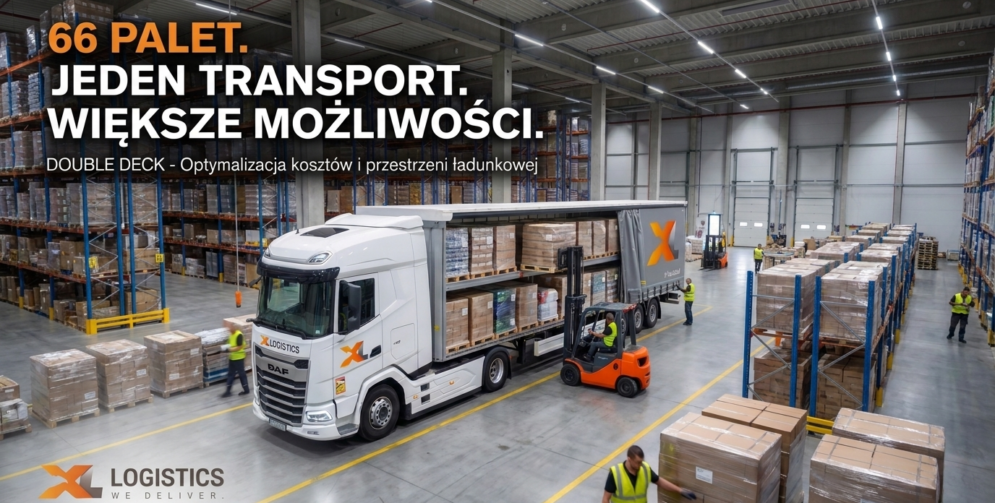
One of the most effective solutions used for transporting sensitive products is the Double Deck system, a semi-trailer with a double floor.

This solution allows you to create two independent loading levels without stacking pallets on top of each other.

In practice, this means that:

  • Each palette has its own space,
  • The load is not pressed from above,
  • The risk of cracking and crushing is reduced,
  • transportation is more stable while driving.

This allows pressure-sensitive goods to be transported without stacking, significantly increasing the safety of the entire transport.

What products are particularly well suited for Double Deck transportation?

The double floor system is used wherever goods require stability and protection from pressure from above.

This most often involves products such as:

  • ceramic pots,
  • garden ceramics,
  • decorative elements,
  • Glassware and delicate products,
  • home furnishings,
  • goods packaged in cartons prone to deformation.

In many cases, the use of Double Deck makes it possible to combine transportation safety with optimal use of trailer space.

Transport of ceramics – logistics is not just transportation

In modern transportation, the way transportation is planned is playing an increasingly important role. It is the properly selected logistics solutions that determine whether the goods will reach the recipient in perfect condition.

Therefore, when transporting products such as ceramics, it is particularly important:

  • proper load distribution,
  • pallet stabilization,
  • Matching the type of trailer to the specifics of the goods,
  • Carrier operational experience.

These are details that are often not visible at first glance, but have a huge impact on the security of delivery.

How do you transport your goods today?

If your products should not be pressed from the top or require special stability during transport, it is worth checking out solutions to reduce the risk of damage.

The Double Deck system is one of them.

And how do you organize the transportation of your pressure-sensitive products today?

If you want to see if a safer transportation solution is possible in your case – we will be happy to show you how it can be arranged in practice.

Transport of pet food

Transportation of pet food – challenges of the pet food industry and the role of a proven logistics partner
The pet food industry has been growing rapidly in recent years. Increasing consumer demands, the expansion of premium brands, omnichannel sales and the pressure of timeliness make logistics one of the key elements of competitive advantage.
For pet food manufacturers and wholesalers, transportation is not just an operational step. This is a strategic element that directly affects product quality, sales continuity and brand reputation.

What challenges does the pet food industry face?

1. pressure of timeliness and continuity of delivery
Wholesalers and retail chains expect deliveries made exactly within time windows. Delaying transportation can mean:

  • No goods on the shelf,
  • loss of turnover,
  • contractual penalties,
  • tensions in trade relations.

In a just-in-time model, even a small disruption in transportation can disrupt the entire supply chain.
2. product sensitivity
Pet food, especially the dry and wet versions, requires proper transport conditions. Improper cargo security, damage to packaging or improper pallet placement can lead to:

  • complaints,
  • financial losses,
  • deterioration of brand image.

For the manufacturer, each defective batch is not only a cost, but also a risk of losing customer confidence.
3. rising operating costs
Fluctuating fuel prices, cost pressures in trade and market competitiveness make it necessary for pet food companies to optimize every element of the supply chain. Transportation is a significant part of the operating budget – so predictability of costs and stability of cooperation is crucial.
4. overseas expansion
More and more Polish pet food manufacturers are expanding sales in EU markets. This means:

  • The need to coordinate international shipments,
  • knowledge of procedures,
  • efficient records management,
  • Timeliness of deliveries to overseas logistics centers.

Lack of experience in international transportation can slow down brand expansion.
5. seasonality and volume spikes
Promotions, new product lines, marketing campaigns or periods of increased demand cause sudden spikes in transportation demand. Companies need a partner that can respond flexibly to changes.

How does XL LOGISTICS support the pet food industry?

Cooperation with a transport operator should go beyond the execution of a single order. At XL LOGISTICS, we focus on long-term operational support for pet food companies.
1. stable domestic and international implementation
We carry out shipments in Poland and throughout Europe, ensuring continuous delivery to:

  • wholesale,
  • central warehouses,
  • retail chains,
  • foreign partners.

2. professional cargo security
We take care of the proper arrangement of pallets and securing the goods, minimizing the risk of damage during transport. Proper cargo space organization translates into product safety and reduced losses.
3. predictability and partnership approach
For the pet food industry, repeatability and stability are key. We offer a cooperation model based on:

  • permanent relationships,
  • transparent communication,
  • efficient operational service.

We are not just a transportation contractor – we are part of the supply chain.
4. support in scaling the business
As volumes increase and we expand into new markets, we tailor the operational scope to meet customer needs. Flexibility in transportation planning allows manufacturers and wholesalers to expand sales without logistical constraints.

Logistics as a competitive advantage

In the pet food industry, product quality is the foundation. However, without efficient transportation, even the best brand can lose its market position.
A stable logistics partner is:

  • lower operational risk,
  • greater predictability of costs,
  • Better organization of deliveries,
  • Support in the development of domestic and export sales.

If you represent a pet food wholesaler or manufacturer and are looking for a carrier who understands the industry – let’s talk about cooperation.
XL LOGISTICS
We Deliver.

Waste transportation is a high-risk area

Waste transportation is a high-risk area. Therefore, it requires a partner, not a carrier.
There are segments in logistics where time is of the essence.
There are also those where price is key.
Waste transportation falls into the third category – areas of high legal and operational responsibility, where regulatory compliance and full process control are paramount.
In this segment, a procedural error does not mean a delay.
It can mean scrutiny, administrative sanctions, halting operations and, in extreme cases, financial and reputational liability.
Therefore, waste transportation is not a standard service. This is a regulated process.

Waste transportation as part of the compliance system

The transportation of industrial waste in Poland and the European Union is subject to detailed legal regulations. This includes, but is not limited to:

  • BDO system registration and operation,
  • Proper issuance of waste transfer cards,
  • SENT transport monitoring,
  • procedures for cross-border waste shipments,
  • compliance with national and EU waste management regulations.

Transportation is one part of a company’s environmental responsibility chain. Any oversight in documentation or waste classification can generate real legal risks.
Professional logistics in this area is not just order fulfillment – it is risk management.

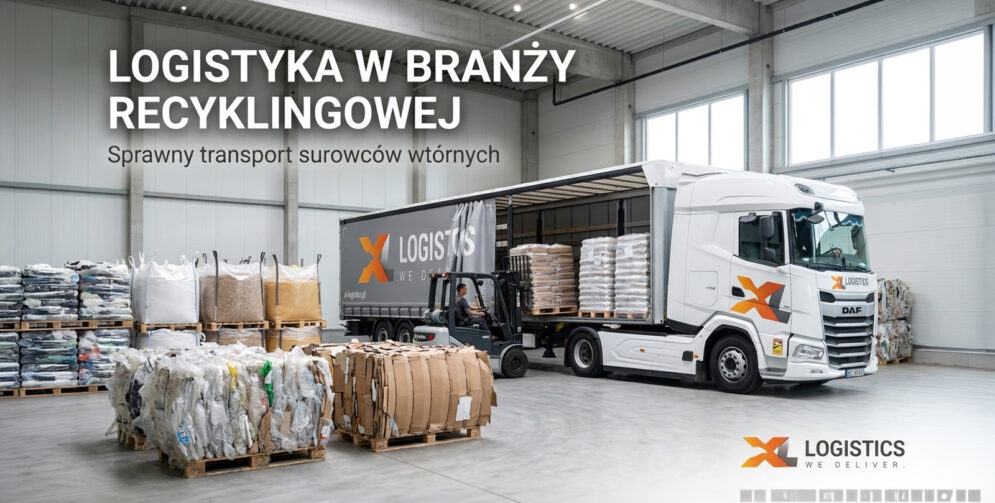
Recycling starts with the right logistics

In the debate about the circular economy, processing technologies are often mentioned.
Less often emphasized is the fact that effective recycling begins earlier – at the point of collection and transportation of the waste.
Of key importance are:

  • proper cargo security,
  • Appropriate selection of rolling stock,
  • Timeliness of deliveries to processing facilities,
  • Transparency of the transportation process.

Logistics determines the operational continuity of processing plants and the efficiency of the entire resource recovery system.

Operational experience as a security factor

Waste transportation requires practical knowledge:

  • Waste code classifications,
  • procedural differences between EU countries,
  • inspection and documentation requirements,
  • The specifics of cooperation with processors.

There is no room for improvisation or schematic approaches in this area.
Every transport must be planned in the context of regulations, procedures and potential risks.

XL LOGISTICS – responsible waste logistics in Poland and the EU

At XL LOGISTICS, we realize waste transportation as a specialized service based on:

  • procedural compliance,
  • documentary supervision,
  • operational control,
  • Experience in domestic and international transportation.

For our business partners, this means one thing:
Legal security, operational stability and predictability of the process.
Waste transportation is a strategic decision.
It is worth entrusting it to an entity that understands its implications.

ISO 9001:2015 at XL LOGISTICS

In the transportation and logistics industry, quality is not a statement.
It is the result of orderly processes, responsible operational decisions and consistency in action – every day.
Therefore, we are pleased to announce that the audit of the Quality Management System at XL LOGISTICS has been completed with a positive result, and our organization meets the requirements of ISO 9001:2015 for domestic and international transport and forwarding.

What is ISO 9001 in logistics in practice?

ISO 9001:2015 is an international quality management standard that certifies that a company:

  • operates based on clearly defined processes,
  • manages operational risk,
  • Ensures consistency and repeatability of service quality,
  • Is subject to regular audits and continuous improvement.

In logistics, this primarily means predictability, security and control over every stage of the order – from transportation planning to documentation to on-time delivery.

What did the audit confirm at XL LOGISTICS?
The positive audit result confirmed that XL LOGISTICS:

  • Transportation and shipping processes are organized and supervised,
  • Quality standards are applied consistently in daily work,
  • operational activities are subject to control and analysis,
  • The organization operates with clearly defined procedures and responsibilities.

The ISO 9001:2015 certificate is valid from January 13, 2026 to January 12, 2029, confirming the stability and continuity of the quality management system adopted.
What does this mean for our customers and partners?
For companies working with XL LOGISTICS, ISO 9001:2015 certification means:

  • Operational security and compliance with international standards,
  • predictability of service delivery, regardless of the scale of the order,
  • Transparency of processes and clear rules of cooperation,
  • A stable logistics partner ready for long-term cooperation.

In the TSL industry, where time, accountability and precision matter, process quality has a direct impact on supply chain continuity.
Quality as part of a strategy, not a one-time goal
ISO 9001:2015 certification is not the end of the process for us, but a confirmation of it.
This is part of XL LOGISTICS’ growth strategy, based on:

  • responsible management,
  • continuous improvement,
  • Building trust in business relationships.

Each audit is an opportunity for review, optimization and further development – both operationally and organizationally.
Summary
At XL LOGISTICS, we believe that quality in logistics starts with processes and ends with customer and business partner satisfaction.
The positive result of the ISO 9001:2015 audit confirms that the direction we have taken is the right one.
Quality. Stability. Responsibility.
We are building logistics on these foundations.

SENT 2026: transportation of clothing and footwear

SENT 2026: transportation of clothing and footwear – how to prepare logistics in practice

As of March 17, 2026, the transportation of clothing and footwear will be subject to mandatory monitoring in the SENT system. This is a significant change for companies operating in the trade, e-commerce and logistics operators handling international and intra-Community shipments. At XL LOGISTICS, we are already analyzing the impact of these regulations and helping customers prepare their transportation processes for the new requirements.

The new regulations aim to tighten the tax system and increase control over the movement of goods considered sensitive. For entrepreneurs, however, this means additional formal obligations that must be taken into account in transportation planning.

What is SENT?

The SENT system is an electronic surveillance system for the carriage of goods operated by the National Tax Administration. It enables real-time monitoring of road and rail shipments based on freight declarations and geolocation data. To date, SENT has covered, among other things. fuels, alcohol or waste, while from 2026 the scope will be expanded to include clothing and footwear.

The obligation to report in SENT will apply to, among others. garments (CN chapters 61 and 62) weighing more than 10 kg, used garments weighing more than 10 kg, as well as footwear (CN chapter 64) weighing more than 20 pieces. In practice, this means that a significant portion of shipments made for the fashion and e-commerce industries will be subject to monitoring.

The SENT declaration will be required primarily for the import of goods from outside the European Union, intra-Community acquisition of goods and transit through Poland. In such situations, both the shipper and the carrier must ensure that the data is properly entered into the system and updated during transportation.

From an operational perspective, this means having an active account on the PUESC platform, an EORI number, and procedures to efficiently prepare SENT declarations before transport begins. In addition, the carrier must ensure the transmission of geolocation data of the vehicle, which in practice requires appropriate technical solutions.

Failure to declare SENT, errors in data or failure to update information can result in hefty financial penalties and even detention of transport for inspection. From the point of view of trading companies, this means the risk of delayed deliveries, broken supply chains and additional operating costs.

SENT and XL LOGISTICS customers

At XL LOGISTICS, we support customers in complying with the new SENT regulations. Our experience in international transportation allows us not only to carry out shipments in accordance with regulations, but also to advise on the organization of documentation, the liability of parties, and the planning of transportation in a way that minimizes operational risks.

Early preparation for SENT changes is a real competitive advantage. Companies that get their logistics and formal processes in order now will avoid nerve-wracking deployments in 2026 and will be able to carry out garment and footwear shipments without downtime.