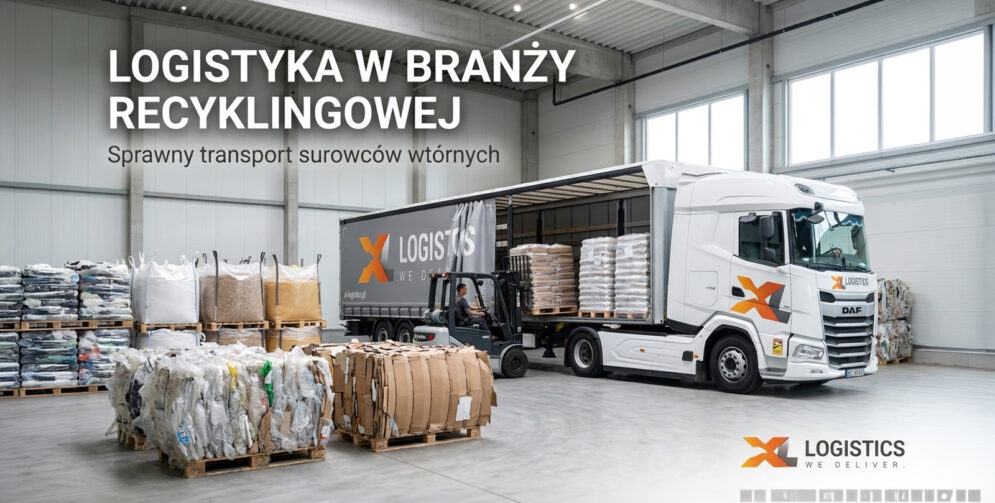
Logistics in the Recycling Industry – How to Efficiently Organize the Transport of Recyclable Materials?
Recycling begins long before it reaches the processing facility. Before plastics, waste paper, metals, or other materials can be reused, they must be collected, properly prepared, and safely transported to the next stage of the process.
For manufacturers and companies operating in the recycling industry, transportation is therefore one of the key elements of the entire supply chain. Irregular receipt of materials can lead to storage space becoming full, and delayed delivery of raw materials to the processing plant can cause disruptions in its operations.
So how can we organize the transportation of recyclable materials to ensure a smooth process, reduce costs, and make better use of available resources?
Transportation of recyclable materials as part of the production process
In the traditional logistics model, transportation is often viewed as the final stage—the finished product leaves the plant and is delivered to the recipient.
In the recycling industry, the flow of materials is different. Transport connects the various stages of the process: the source of the material, the collection point or warehouse, the sorting facility, the recycling plant, and finally the company that uses the recovered raw material.
The efficiency of each of these connections affects the functioning of the entire chain.
Therefore, logistics should be planned not only with a single shipment in mind, but above all with a view to the continuity of the flow of materials.
What kinds of materials are shipped?
The range of materials sent for recycling is very broad. Transportation may include, among other things:
- waste paper and cardboard,
- plastic films and packaging,
- plastics,
- metals and metal components,
- post-production materials,
- materials packed in big bags,
- recyclable materials prepared for reuse.
The form of the load can be just as varied as the material itself. The goods may be on pallets, in bales, in bags, or in big bags.
It is the type, weight, volume, and method of preparation of the material that should determine how its transportation is organized.
Large volume, low weight—a challenge for logistics
One of the characteristic challenges facing the recycling industry is the relationship between the mass and volume of the materials being transported.
Films, packaging, plastics, and certain types of post-production waste can take up a significant portion of the cargo space, despite their relatively low weight.
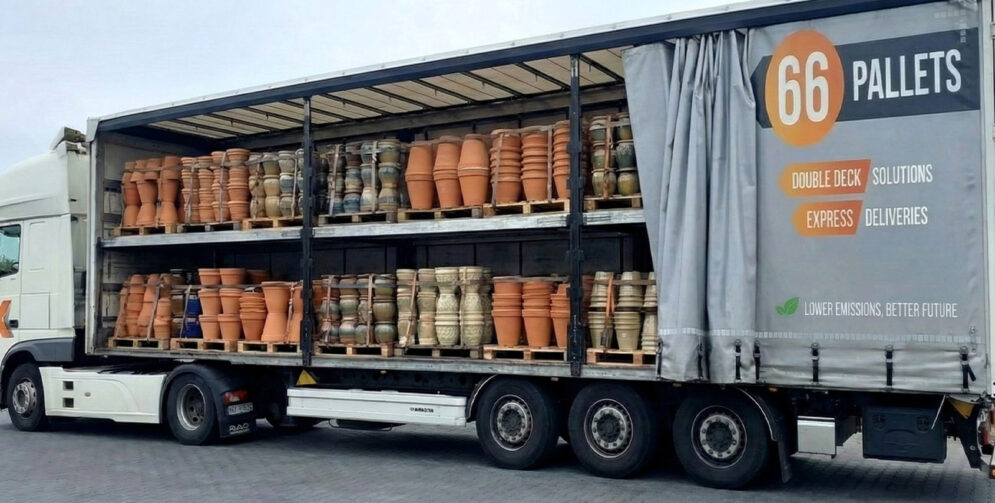
In such a situation, the cost of transportation depends largely on how efficiently the available space in the trailer is utilized.
One solution may be to properly prepare the material before pickup—by pressing it, baling it, arranging it correctly on pallets, or using packaging that minimizes unused space.
The more material that can be safely transported in a single shipment, the fewer trips are needed to handle the same volume.
Regular pickup of materials helps maintain a smooth production flow
For a manufacturing facility, materials intended for recycling take up space that could often be used to store raw materials or finished products.
The problem becomes particularly evident on a large scale of production.
Instead of arranging transportation only when the storage facility is nearly full, it’s a good idea to determine:
- the average amount of material produced over a given period of time,
- available storage space,
- the optimal frequency of pickups,
- the minimum volume required to justify a full shipment,
- periods of increased production.
Based on this, you can create a schedule for regular pickups.
This solution reduces the need for urgent shipments and allows for better use of space on the plant grounds.
What about recycling facilities?
Smooth transportation is just as important at the other end of the supply chain. A materials processing plant needs an adequate supply of raw materials to maintain continuous operations. Too many deliveries at once can overload the warehouse and the yard, while too few can lead to a shortage of materials.
Therefore, it is advisable to coordinate the transportation schedule not only with the capacity of the facility from which the material is picked up, but also with the recipient’s capacity. Well-planned logistics help create a more predictable flow of raw materials between companies.
How do you prepare materials for transport?
Proper cargo preparation affects both the safety and efficiency of transport. Depending on the type of material, pallets, big bags, bales, sacks, or other forms of packaging may be used.
Before transport, it is important to ensure the stability of the cargo units, secure them to prevent shifting, and arrange the cargo efficiently within the trailer.
It is particularly important to minimize empty spaces between cargo units. For regular shipments, even a slight improvement in space utilization can result in fewer shipments per month or per year.
Domestic or international shipping?
The recycling market is increasingly operating within international supply chains. Material produced in one country may be sorted or processed in another, and the recovered raw material may then be sent to another manufacturer.
In such cases, transportation planning should take into account not only distance, but also:
- lead time,
- requirements regarding the material being transported,
- documentation,
- vehicle availability,
- restrictions in effect along the route,
- the ability to organize regular flights.
For regular material flows, it makes sense to analyze the entire transportation process rather than organizing individual shipments each time.
How Can We Reduce Transportation Costs in the Recycling Industry?
The lowest price for a single shipment does not always mean the lowest cost for the entire process. Significantly greater opportunities for optimization arise when the entire material flow is analyzed. In practice, there are a few areas worth paying attention to:
1. Maximizing cargo space
Proper preparation, compaction, or arrangement of the material can allow a single vehicle to transport a larger volume.
2. Regular acceptance schedules
Fixed schedules make it easier to plan transportation and reduce the number of urgent shipments.
3. Consolidation of materials
If the nature of the cargo and the transportation requirements allow it, combining shipments appropriately can increase transportation efficiency.
4. Analysis of Production Seasonality
At some companies, the amount of materials intended for recycling varies throughout the year. The transportation schedule should take these fluctuations into account.
5. Long-Term Planning
For regular shipments, it’s a good idea to analyze monthly or annual transportation needs rather than just individual orders.
From Waste to Raw Material—Logistics Closes the Loop
In a circular economy, a material that is a byproduct of one company’s production process can become a valuable raw material for another. For this to be possible, there needs to be a smooth flow of communication among all participants in the process.
The transport of recyclable materials should therefore be treated as an integral part of the recycling system—from the point where the material is generated, through sorting and processing, to its reuse.
Well-planned logistics mean fewer unnecessary trips, better use of cargo space, more predictable pickups, and a more efficient flow of materials.
For manufacturers and companies in the recycling industry, this means one thing above all else: greater control over the process and the ability to focus on the company’s core business.