
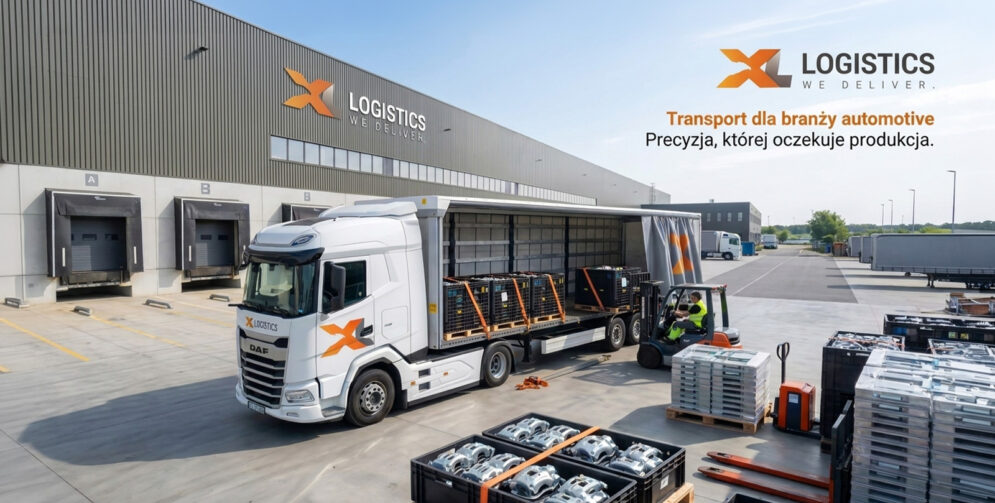
The automotive industry is one of the most demanding sectors of the economy. High production rates, complex supply chains, and pressure to meet deadlines mean that logistics is becoming not just a support service, but an integral part of the entire production process.
In this environment, every part, component, or subassembly must be in the right place exactly when it is needed. Even a brief delay can affect production continuity, generating costs and disrupting operations throughout the entire plant.
The automotive industry operates according to a precise schedule
Vehicle manufacturers and component suppliers operate within a model in which the predictability of supplies is key. Warehouses are often optimized to minimize inventory, and production processes rely on a steady flow of parts and materials.
This means that transportation must be:
- on time,
- flexible,
- properly planned,
- monitored at every stage of implementation.
In practice, logistics for the automotive industry requires much more than just basic freight transport. This involves the day-to-day coordination of numerous processes carried out simultaneously by manufacturers, suppliers, and logistics operators.
What types of cargo are transported for the automotive industry?
The automotive sector encompasses a wide range of products that require specialized transportation services. These include, among others:
- auto and automotive parts,
- components used in vehicle manufacturing,
- technological materials,
- operating fluids,
- production equipment,
- production line equipment components.
Each product group may require a customized approach to security, loading, and transportation logistics.
Timeliness has a direct impact on production
In the automotive industry, a delivery delay does not simply mean a postponement of the delivery date.
May result in:
- production line downtime,
- the need to change the production schedule,
- additional operating costs,
- a disruption in the production process.
That is why companies in the automotive sector expect their logistics partners not only to provide transportation services, but also to actively support them in planning and managing deliveries.
Flexibility and the ability to respond quickly to changes
The automotive industry is dynamic. Fluctuating volumes, new orders, or sudden production needs require rapid adjustments to transportation.
Of key importance are:
- effective operational communication,
- the ability to arrange express shipments,
- availability of appropriate means of transportation,
- experience in managing manufacturing projects.
For urgent deliveries, solutions that reduce transit time—such as express shipments carried out by a two-driver crew—are often used
Transport Optimization and Operating Costs
Modern automotive logistics also involves cost optimization and the efficient use of cargo space.
Solutions that enable the following are becoming increasingly important:
- increase the number of cargo units transported,
- reduce the number of courses offered,
- improve the efficiency of fleet utilization,
- reduce the environmental footprint of transportation.
That is why manufacturing companies are increasingly looking for logistics partners that offer a variety of transportation solutions tailored to the specific characteristics of the components being shipped.
XL LOGISTICS – a partner for the automotive industry
At XL LOGISTICS, we provide domestic and international transportation services for the automotive sector, tailoring our logistics solutions to our clients’ production processes. We handle the transport of auto parts, components, production materials, and equipment used by manufacturers and suppliers in the automotive industry.
We understand that in the automotive industry, it’s not just about delivering the cargo. What matters is production continuity, on-time delivery, and the ability to respond quickly to market needs.
That is why we focus on solutions that help our customers build stable and efficient supply chains.
XL LOGISTICS: WE DELIVER.
